The Lemon Tree: Limoncello, Lemon Blossoms & Everyday Magic
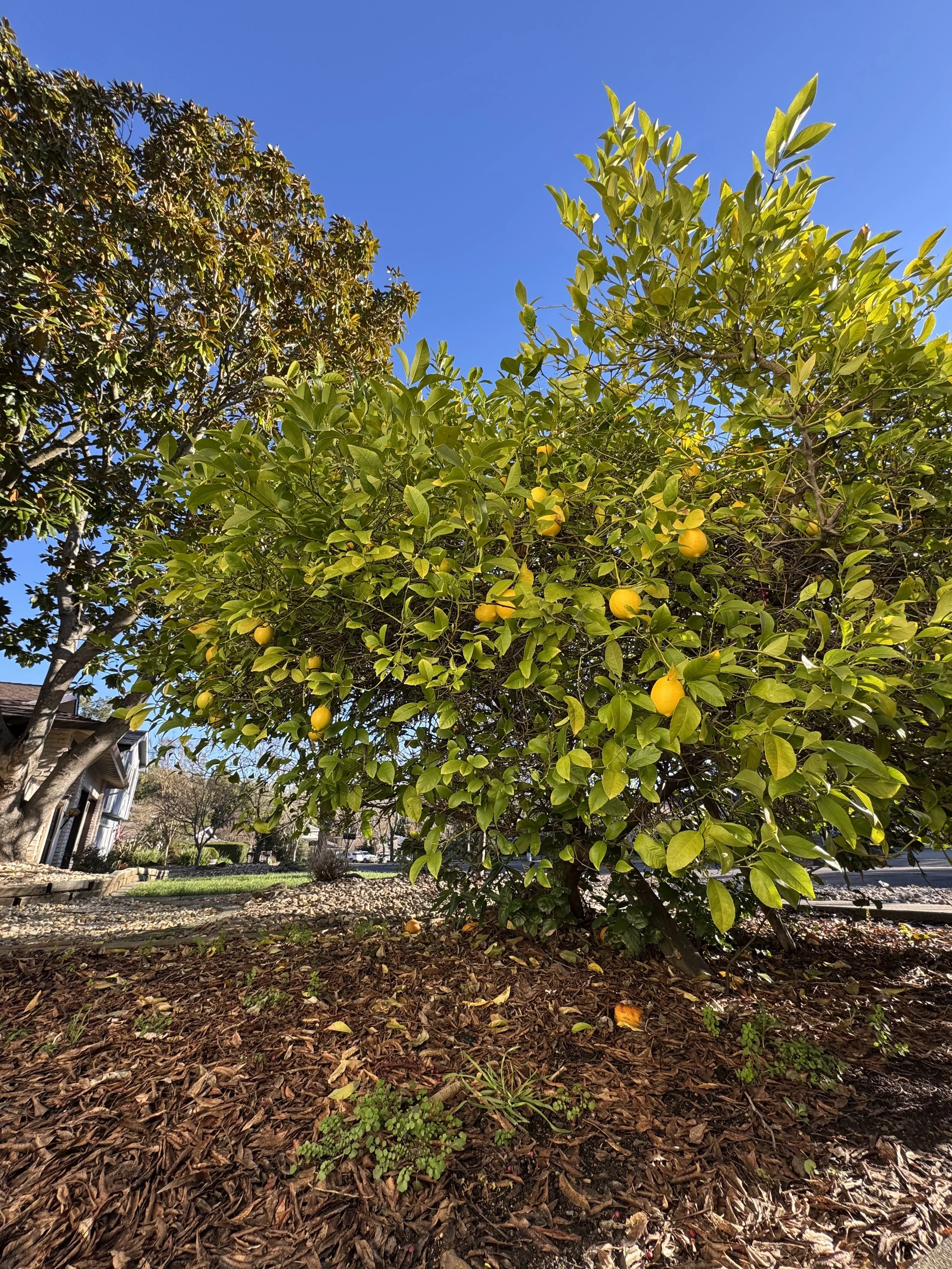
The lemon tree that outlived barrels, winters, and everything we thought it couldn’t.
A long time ago, a Meyer lemon tree was planted in a half wine barrel in the front yard of the house I grew up in.
I don’t remember exactly when it appeared — sometime after I’d left home and moved to another city about an hour away. The tiny lemon tree filled a space alongside the driveway where there had once been a patch of fussy lawn and a messy tree: never to my dad’s liking (he was all about the perfect lawn), and never to my mom’s liking either, because my mom detested messy trees — no matter how beautiful their fall leaves might be.
The lemon tree was centered in the half wine barrel — a favorite planting container in this household. The barrel was centered in the driveway bed, surrounded by very pedestrian, suburban-chic cedar bark.
And for a long time, I didn’t pay much attention to it.
The tree became part of my life, I suppose, when it began to bear fruit. Plentifully.
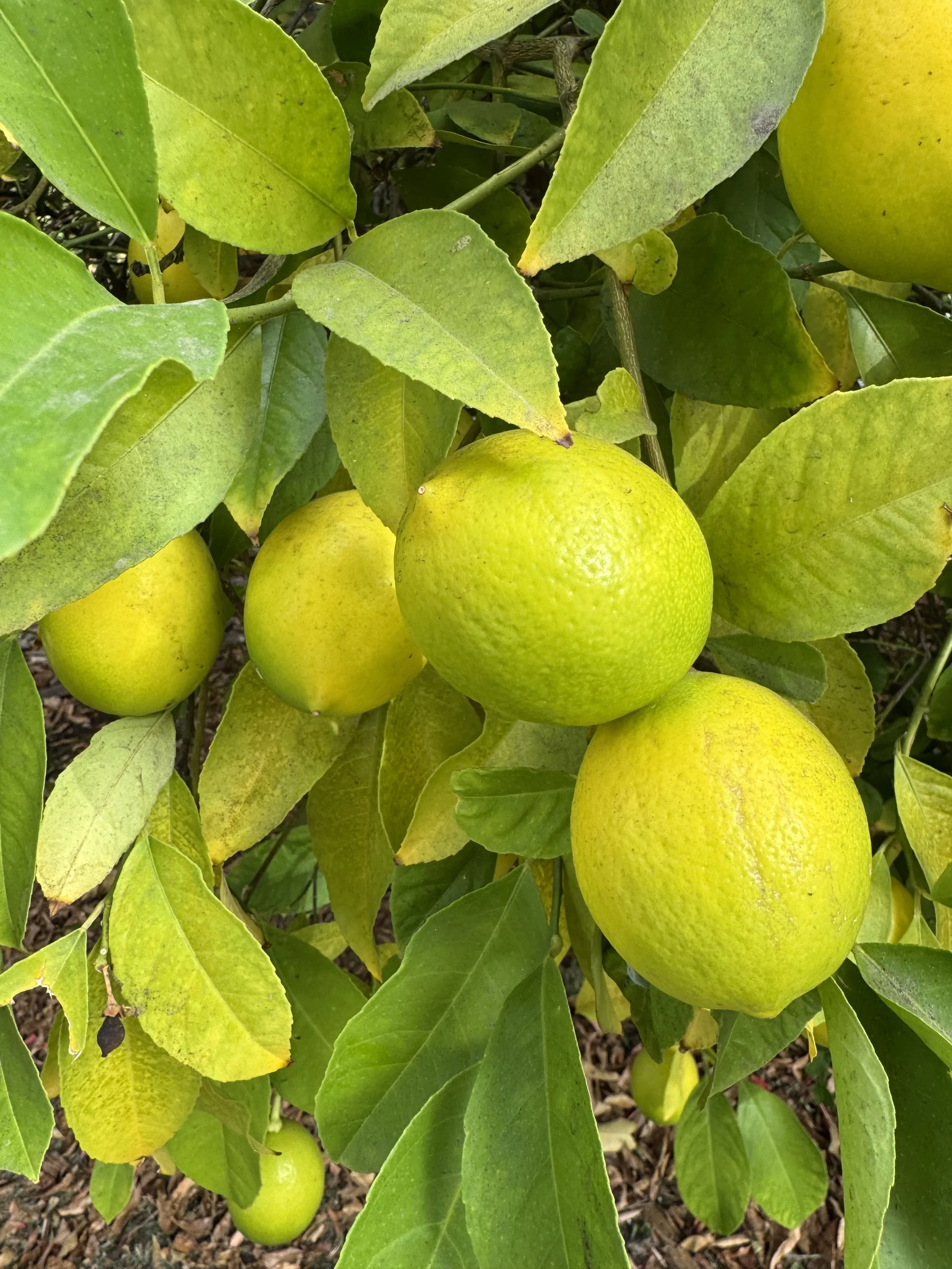
Sweet, sunlit Meyer lemons.
Somewhere along the line, with a whole bunch of Meyer lemons on their hands, my mom and dad decided to make limoncello. I don’t remember them having, serving, or even liking limoncello before this. But the tree was prolific, and they already had enough frozen Meyer lemon juice cubes to last years.
I remember their first batch. They used a recipe — Martha Stewart’s, I believe — and it called for 100 proof Everclear, which wasn’t available in California. So my parents drove all the way to Nevada to buy it.
That batch was made, and then for the next year, every time we visited, dessert was ice cream with limoncello poured over it.
The next year, they made it again — but from a new recipe. Giada’s, if I remember correctly. This one didn’t require crossing state lines; it called for ordinary vodka, available by the handle at Costco. Which still required a drive to a neighboring city, but not a neighboring state.
By now the lemon tree had become outrageously prolific, and limoncello became a kind of family currency. Every Christmas, bottles of homemade limoncello appeared in our stockings. And on other occasions, too.
The neighbors received bottles for the holidays. Friends and relatives did too. The gardener my parents hired after my dad was no longer hardy enough to mow all the lawns anymore — he got a bottle. I’m pretty sure the mailman got one. And the banker. And the tax preparer.
There are, in fact, still a couple of bottles of homemade limoncello, carefully labeled in my mom’s cursive handwriting, rattling around in the freezer.
She has been dead for over nine years now.
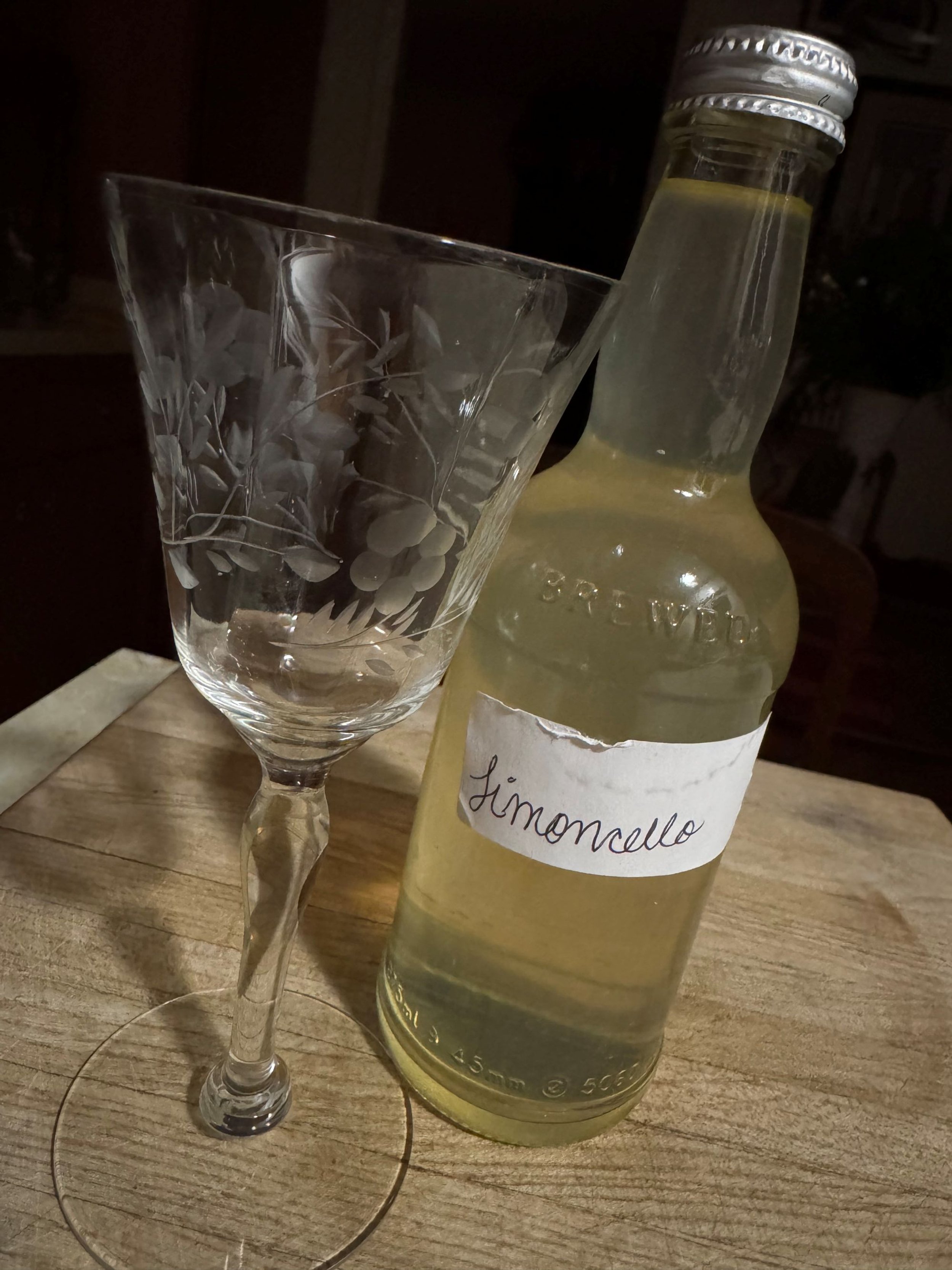
Winnie’s limoncello: still rattling around in the freezer.
And then there were the lemon bars — with Meyer lemon curd. They were served almost as frequently as the limoncello. Any time my mom needed to bring a dish somewhere, she brought dessert: lemon bars.
My mom was a nurse — she became an R.N. through the Army Corps of Nurses during World War II and graduated just as the war ended. She worked as a nurse for most of my childhood, from grade school on, and she had a remedy for everything. If you had so much as a sniffle or a scratchy throat, her first and fastest line of defense was a hot toddy — a non-alcoholic one during childhood, and a much different one for grown-ups. Hot water, a spoonful of honey, whiskey if you were of age, and most importantly: Meyer lemon juice. Fresh from the tree if it was in season, or an ice cube from the last crop if it wasn’t. To this day, it’s still my first line of defense when anyone in our household is feeling peaked.
Even neighbors who weren’t on the official limoncello list loved the lemon tree. The fruit was incredibly sweet — truly the best Meyer lemons I’d ever tasted. People would walk by and ask if they could pick a few for a recipe. The little girls next door would pick some (with permission) and make lemonade to sell. We got lemonade for free.
There were always too many lemons.
Bushels of them left long after “lemon season.” And they were impossible to reach without thorns tearing at your clothes and leaving you scratched and bloody. Over time, the tree grew so large it became impossible to reach the center even with your arm fully outstretched, even when you thought you were being careful.
My parents cared for that lemon tree the way many people would care for a beloved pet. Or even a child. They pruned it, fertilized it, fed it — and it grew and grew and grew. Much larger than any pet. Or child.
It eventually overtook the entire side of the driveway.
When the temperature threatened to dip below freezing, my parents — well into their eighties — would drag out ladders, old bed sheets, and wooden clothespins to cover the tree. The next day, they’d uncover it so it could get sun. And then cover it again before nightfall if it was going to be cold.
This practice went on for years.
After my dad passed away, my mom — now in her late eighties — struggled to cover the tree on her own. And (perhaps due to the gallons of limoncello shared over the years), a delightful lesbian couple down the street began helping her, covering and uncovering the lemon tree to protect it from frost.
The only trouble was: they’d cover it and leave it covered for days, until the general weather pattern warmed. My mom was incredibly grateful, but she fretted about it. When I visited — which I was doing more often after my dad’s passing — I sometimes had to go uncover it, then cover it again before heading home.
It was quite a chore: ladders and multiple sheets and so many clothespins.
It seemed like a lot of trouble for a few bottles of limoncello. Unless you really, really loved limoncello.
Soon after my dad’s passing, the tree escaped its half wine barrel. The wood had rotted until the barrel was nothing more than a few old slats and metal rings. The root ball sat partially exposed atop the ground, and without stable footing, the tree toppled lazily over — not breaking, not uprooting completely, just listing onto the sidewalk.
The gardener told us, regretfully, that the tree would certainly die.
But again, the neighborhood came to the rescue. The lovely gentleman across the street and his next door neighbor came over and managed to prop it up using a two-by-four carefully placed under a branch at an angle.
The tree never showed any distress. It continued producing sweet lemons as prolifically as ever.
Not long after, I moved back home. My mom was in her nineties and needed someone close. She needed help with the house, and company — and yes, help with the lemon tree.
The neighbor ladies eventually retired and moved away, and no one stepped in to manage frost duty anymore. It became my chore.
And I resisted.
I was convinced the tree would survive the cold, even freezing temperatures — and would outlive us all. I worked full-time and traveled often; it didn’t feel practical to race out with sheets and ladders at sundown.
After everything the tree had survived, I figured: whatever happens, happens.
The tree stayed naked for an entire winter. Freezing temperatures and all.
It was fine.
It continued producing lemons at an overwhelming rate.
By then, I had moved back into my old bedroom in my childhood home — a mid-century house my parents bought brand new in the northern part of the San Francisco Bay Area.
We don’t have air conditioning. We don’t really need it. Many newer houses do, and plenty of remodeled houses have installed it. I could have.
But I passed.
Because when the weather is warm, I open the windows. And what people with air conditioning miss is this: the absolutely magical scent of lemon blossoms riding the gentle evening breeze up and into the house.
I cannot imagine a fragrance more magical than Meyer lemon blossoms.
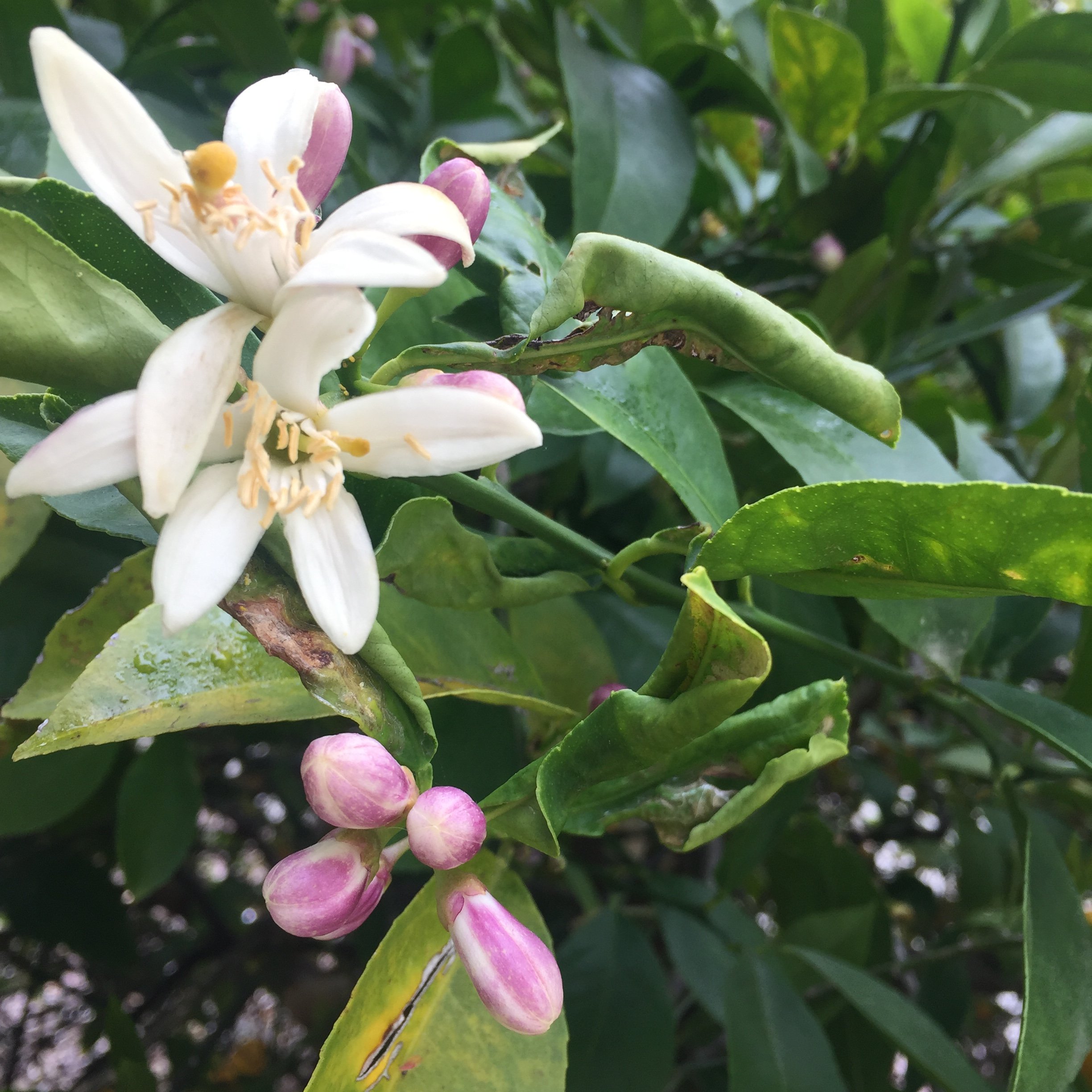
Lemon blossom magic.
My mom passed away a few years later at the tender age of ninety-two.
I inherited the house, the lemon tree, and the gardener. The gardener makes limoncello every year, and I get a bottle or two to add to my freezer collection. I have more than a lifetime supply by now.
I live here now with my partner, Neil. He works in hospitality and restaurant management, and sometimes he harvests a five-gallon bucket of Meyer lemons to share with the chef and bartender for whatever they dream up.
The neighbors still pick lemons at will. I use at least one lemon a day for various recipes and concoctions.
And one day last year, I was out near the lemon tree when I saw something move quickly in the next door neighbor’s yard. We live along a creek and often have deer and other wildlife browsing in our neighborhood. I assumed it was a deer — but when I stepped around the lemon tree to see, it was a little girl.
Tiny as a fawn. And about as shy.
She was backing away toward her house, clutching lemons like treasure. Then her mom stepped out, smiling sheepishly, and explained that the neighbor between us had given them permission to pick lemons for a cookie recipe.
I greeted them and assured them it was absolutely fine — and that we’d be grateful if they picked as many lemons as they could possibly use.
I did not receive any lemon cookies… but I am not actually keeping score.
This story ran through my mind this morning as I stepped out into the very cold air — near freezing, I believe — and walked out to the massive lemon tree to pick a big, plump, bright yellow lemon for my morning matcha tonic.
This tree is a marvel.
It is a gift.
It is magic.
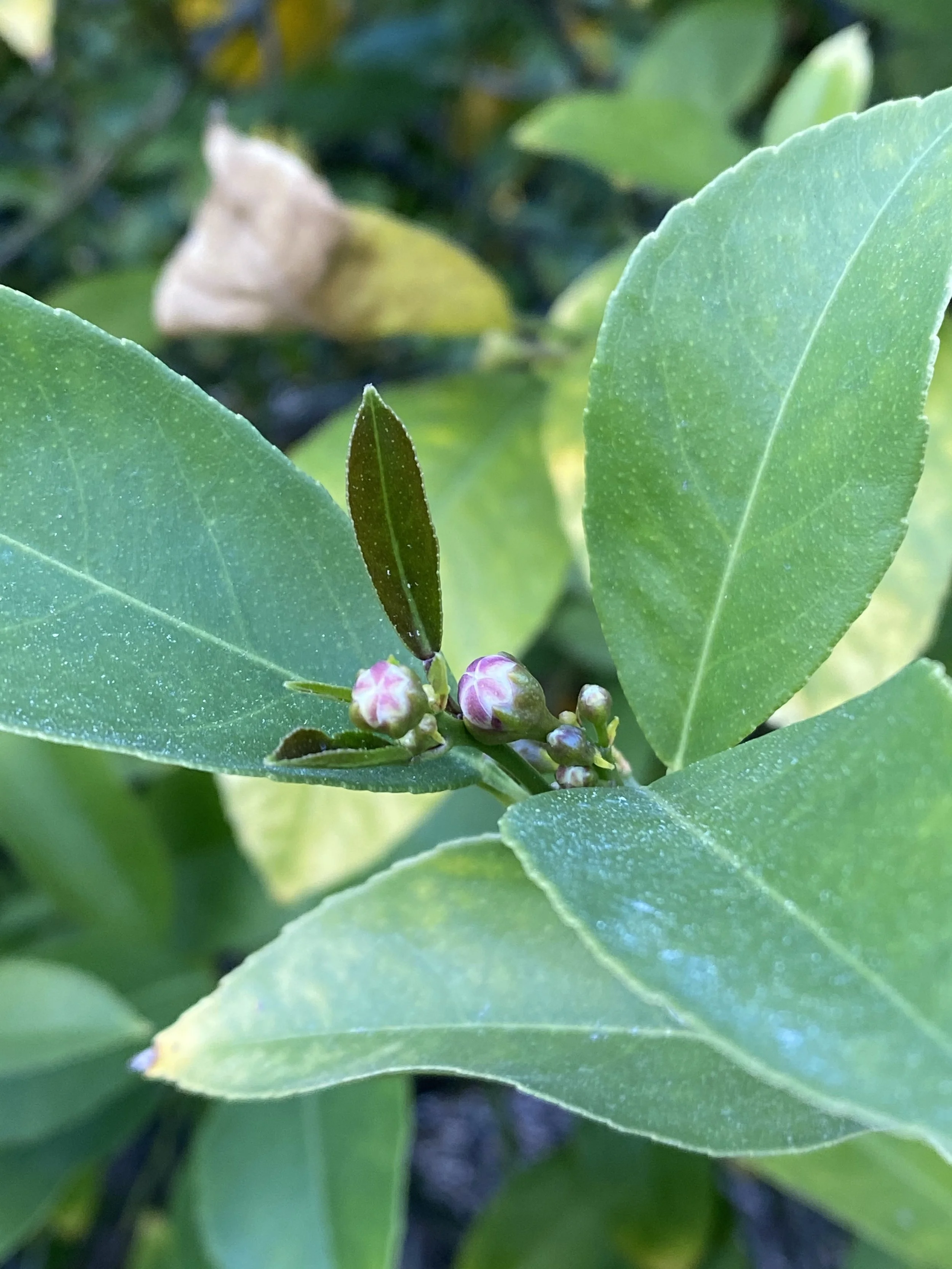
Spring, loading…
And somehow, it still belongs to my parents… and this house… and this neighborhood… and to everyone who has a bottle of Winnie’s limoncello rattling around in their freezer.